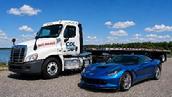
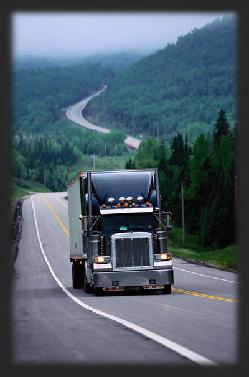
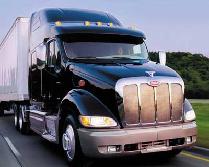
| "So,... You think you might want to be a Truck Driver?" |
| "Truck Drivers" and "Driver/Sales" workers hold 45 percent of ALL jobs in US Industry! |
| (as identified by the Bureau of Labor Statistics-2008).....World Clock Time (UTC): |
|
|
www.CDLTeacher.com is a "PROBLEM/SOLUTION"
pay for (ONLY what you need help with) informational site & service that utilizes my personally tested and developed
"LOOK / TOUCH / INSPECT", and
"LEARN IT, SAY IT, PASS IT" processes!
|
|
Commercial Drivers License (CDL) CONSULTATION by www.CDLTeacher.com
is here to HELP you identify not only YOUR area's of weakness,
for anyone & everyone interested in a CDL License,
but also to help improve AND contribute to make SAFER, our
"HIGHWAYS & ROADWAYS" .
The experiences during which I formed my "Opinion", are the culmination of years of working within many area's of Academic and Professional Education atmospheres, as well as being formed during Military, Commercial & Professional assignments and/or affiliations. from "Lobbying for Professional Regulation" alongside State Officials and Professional Organizations,... to Consulting Local Municipalities,... from Supervising Accident Investigations to Driver Remedial Training,... during Authoring Private Entity SOP's",... and throughout extensive consultation and championing of multiple state and local testing processes and procedures!
CDL Teacher™ is an independent educational resource. This guide is not an official government publication and is not represented as being issued, approved, or endorsed by ANY state DMV, FMCSA, or any other government agency.
Use of these guides or e-booklets DO NOT GUARANTEE a passing score, license, or endorsement, employment, or test result. The student remains responsible for learning and performing the inspection required by the applicable testing authority.
YOUR PURCHASE is for PERSONAL STUDY USE ONLY!
DO NOT reproduce, resell, redistribute, upload, publish or share any of the Guides or e-Booklets obtained here, in whole or in part, without written permission from CDL Teacher™. copywrited: 2011 - CDL Teacher™. (All Rights reserved)
|
These offerings are "One Man's OPINION" !
Don't pay a school or site alot of $$,
for what you can get INEXPENSIVELY or for FREE!
My GOAL: To provide the highest quality Instruction at affordable prices (reducing overhead and cost) by offering DIGITAL downloads or E-mailed access dirctly to you my e-booklets or workbooks to: Individuals, Corporations, Local Municipalities, the Driving Community, or Technical Colleges, to empower individuals by providing the most complete and all-encompassing Driver Training site, that is available from over 45 years of SAFE and "Accident-Free" Driving. The A.H.F.O. (All Historical / Factual Opinion) provided by this www.CDLTeacher.com site, and all contained herein, that is needed to pass MOST State - Class A or B Commercial Driver's License tests, and "All Area's of Instruction" provided by MOST "Local Driving Schools" near YOU & I. The following LINKS will guide you to many of the MID-WEST Regions "State CDL Study Guides"; ILLINOIS, IOWA, OHIO, MISSOURI, Texas, WISCONSIN ...ENJOY!
|
Your Choice of Training options are many... but remember... I suggest that you;
Do NOT enroll yourself in a school that is taught by;
.... Instructors that do not have a respectable # of years Experience,
......or Occasional "Part-Timers", with "NO STATE CERTIFICATION as ADULT Instructors",
........... or is taught by someone through his lone tooth! or "Decaying SMILE",
..............or a "Long-Haired, Dirty Shirt, Hippie Type",
...................or "Vest-Wearing, Sleeveless-Shirt ... Biker",
.................or a "BAD ATTITUDE
OBSCENE Vocabulary using - Jerk!!!!
If they DON'T care about their appearance, or professionalism (or LACK of), why would they care about COMPLETELY and ACCURATELY Training YOU?.... TRAINING that YOU will be PAYING FOR!
>>>ALWAYS REMEMBER: YOU GET WHAT YOU PAY FOR!<<<
|
DO NOT "Buy INTO" the Hype... HELP Yourself!!!!!
LOOK, TOUCH, INSPECT
LEARN IT, SAY IT, PASS IT!
GO to your local State Facility,
GET a "Commercial Driver" Guidebook, and
READ it!,
...... then: READ IT AGAIN!
If there are QUESTIONS at the end of each chapter,Try to answer them, and if you do not get most of them correct,... READ the Chapter again, BEFORE you move to the next one!!!
Try THIS before you think about giving away your money!!! iF you still need ckarification... come get what you need, as you need it,...
at the MOST affordable PRICE!!
|
Whenever you need to: come back to
www.CDLTeacher.com
to prepare yourself with our Guides or e-Booklets
|
Using this "Pay-as-you-Need"
you can identify the areas you
or your employees need to improve
or further their studing or training!
If You would like to know what you MIGHT be getting into... READ Below, otherwise: Click >proceed to the 'Next' page< to see the information that we Offer.
|
| Statistics of Trucking (for the Curious minds) and... Some "BASIC History" of this Industry... |
Who or What is "Trucking": Firms in the truck transportation and warehousing industry provide a link between manufacturers and consumers. Businesses, and occasionally individuals, contract with trucking and warehousing companies to pick up, transport, store, and deliver a variety of goods. The industry includes general freight trucking, specialized freight trucking, and warehousing and storage.
General freight trucking uses motor vehicles, such as trucks and tractor-trailers, to provide over-the-road transportation of general commodities. This industry segment is further subdivided based on distance traveled. Local trucking establishments carry goods primarily within a single metropolitan area and its adjacent non-urban areas. Long-distance trucking establishments carry goods between distant areas.
Local trucking comprises up to one-third of the trucking industry in most cities and towns of the Unites States. The work of local trucking firms varies with the products transported. Produce truckers usually pick up loaded trucks early in the morning and spend the rest of the day delivering produce to many different grocery stores. Lumber truck drivers, on the other hand, make several trips from the lumberyard to one or more construction sites. Some local truck transportation firms also take on sales and customer relations responsibilities, in addition to delivering the firm’s products. Some local trucking firms specialize in garbage collection and trash removal or hauling dirt and debris.
Long-distance trucking comprises establishments engaged primarily in providing trucking between distant areas and sometimes between the United States and Canada or Mexico. Numbering over 41,000 establishments, these firms handle every kind of commodity.
Specialized freight trucking provides over-the-road transportation of freight, which, because of size, weight, shape, or other inherent characteristics, requires specialized equipment, such as flatbeds, tankers, or refrigerated trailers. This industry sector also includes the moving industry—that is, the transportation of used household, institutional, and commercial furniture. Like general freight trucking, specialized freight trucking is subdivided into local and long-distance components. The specialized freight trucking sector contained 48,000 establishments in 2006.
Some goods are carried cross country using intermodal transportation to save time and money. Intermodal transportation encompasses any combination of transportation by truck, train, plane, or ship. Typically, trucks perform at least one leg of the trip. For example, a shipment of cars from an assembly plant begins its journey when they are loaded onto rail cars. Next, trains haul the cars across country to a depot, where the shipments are broken into smaller lots and loaded onto tractor-trailers, which drive them to dealerships. Each of these steps is carefully orchestrated and timed so that the cars arrive just in time to be shipped on their next leg of their journey. Goods can be transported at lower cost this way, but they cannot be highly perishable—like fresh produce—or have strict delivery schedules. Trucking dominates the transportation of perishable and time-sensitive goods.
back to top
|
Conditions & Hours. Of previous years, workers in the truck transportation industry averaged 40.9 hours a week, compared with an average of 37.9 hours in warehousing and storage and 33.9 in all private industries. The U.S. Department of Transportation governs work hours and many other working conditions of truck drivers engaged in interstate commerce. Long-distance drivers are not permitted to drive after having worked for 60 hours in the past 7 days or 70 hours in the past 8 days, unless they have taken at least 34 consecutive hours off duty. Drivers are required to document their time in logbooks. Many drivers, particularly on long runs, work close to the maximum time permitted because employers usually compensate them on the basis of the number of miles or hours they drive. Drivers frequently travel at night, on holidays, and on weekends to avoid traffic delays so that they can deliver their cargo on time.
Work environment. Truck drivers must cope with a variety of working conditions, including variable weather and traffic conditions, boredom, and fatigue. Many truck drivers enjoy the independence and working without direct supervision found in long-distance driving. Local truck drivers often have regular routes or assignments that allow them to return home in the evening.
Improvements in roads and trucks reduce stress and increase the efficiency of long-distance drivers. Many advanced trucks are equipped with refrigerators, televisions, and beds for their drivers’ convenience. Included in some of these state-of-the-art vehicles are satellite links with their company’s headquarters, so that drivers can get directions, weather and traffic reports, and other important communications in a matter of seconds. In the event of bad weather or mechanical problems, truckers can communicate with dispatchers to discuss delivery schedules and courses of action. Satellite links allow dispatchers to track the location of the truck and monitor fuel consumption and engine performance.
Vehicle and mobile equipment mechanics, installers, and repairers usually work indoors, although they occasionally make repairs on the road. Minor cuts, burns, and bruises are common, but serious accidents typically can be avoided if the shop is kept clean and orderly and if safety practices are observed. Service technicians and mechanics handle greasy and dirty parts and may stand or lie in awkward positions to repair vehicles and equipment. They usually work in well-lighted, heated, and ventilated areas, but some shops are drafty and noisy.
Laborers, and hand freight, stock, and material movers usually work indoors, although they may do occasional work on trucks and fork lifts outside. These occupations often require a great deal of physical labor, including heavy lifting.
Safety is a major concern for the truck transportation and warehousing industry. The operation of trucks, fork lifts, and other technically advanced equipment can be dangerous without proper training and supervision. Truck drivers must adhere to federally mandated certifications and regulations requiring them to submit to drug and alcohol tests as a condition of employment. Employers are required to perform random on-the-job checks for drugs and alcohol.
Work-related injuries and illnesses per 100 full-time workers averaged 5.8 in the truck transportation industry and 8.0 in warehousing and storage, compared with a rate of 4.4 for the entire private sector. More than 8 out of 10 on-the-job fatalities in the truck transportation industry resulted from transportation related incidents.
back to top
|
|
The Commercial Motor Vehicle Safety Act of 1986 (CMVSA) was passed by Congress to address the problems caused by irresponsible and unqualified bus and truck drivers who are damaging the image of a safety-conscious profession.
Unqualified drivers, often licensed following inadequate testing in many other states, have been found to be the cause of tragic accidents and other threats to highway safety. Many times, these drivers sought to escape responsibility for their actions by carrying driver’s licenses issued by many states and spreading their traffic convictions among these licenses — thus avoiding suspensions or revocations.
The CMVSA was designed to stop these abuses by prohibiting drivers from holding more than one license. A nationwide information system prevents the issuance of multiple licenses, allows states to exchange information on traffic violations and makes it easier to remove problem drivers from the road.
Those drivers who violate the law are subject to tougher penalties.
In addition, the law requires states to adopt uniform testing standards for commercial drivers prior to licensing. These testing standards are similar to those in effect in Illinois for years.
Under federal CDL rules, every state must require the CDL skills test to be performed in a vehicle representative of the class/type the applicant intends to operate. States can impose additional restrictions, but they cannot go below the federal minimum.
For Class A, this distinction is especially important. A Class A applicant needs a combination with a GCWR of at least 26,001 lb and a towed vehicle GVWR over 10,000 lb.
The test vehicle's equipment also determines restrictions:
- Automatic transmission → E restriction (no manual-transmission CMV).
- No full air brakes → L restriction.
- Air-over-hydraulic brakes → Z restriction.
- Class A combination using a pintle hook/non-fifth-wheel connection → O restriction, meaning the driver cannot operate a Class A tractor-trailer requiring a fifth wheel.
Most states require testing and inspection for the type of vehicle for which an applicant is seeking a license.
Finally, sanctions for serious traffic violators will help ensure that commercial drivers remain accountable for their actions.
|
|
CDL Questions most drivers need answers to; (we can ANSWER)!
Who Must Obtain a Commercial Drivers License (CDL) License?
What all must I do for a Illinois CDL License?
What "Written Knowledge Tests" and "Endorsements" must I be able to pass?
What kind of Drivers are “Exempt” from obtaining a CDL License?
How many "Driver’s License Classifications" are there?
Are there "Special Endorsements" for each classification?
What "Exams and Tests" are required at the Secretary of State facilities?
What is the "MCSIA" Rule?
The "Un-Authorized Assistance" or "Illinois Bribery Law" rules?
What are the "Federal Regulations" involved?
How do I contact an "ILLINOIS Secretary of State" facility?
or the "REAL" question...
How do truck drivers get paid & how much do they make?
So you want to know how much a trucker makes and how he/she gets paid? A typical trucker gets paid by the mile. He/she has to make as many miles as possible to achieve a good paycheck. While that trucker is sitting in the dock, or traffic, or shopping --- they get paid NOTHING (most of the time). A driver can make anywhere from .15 cents a mile to around .48 cents a mile. Depending on how long they've driven, or how "accident-free", or many other variables. So to break it down to how much a driver brings home specifically is difficult, but they could average from $300 to $1,800 a week.
back to top
or here's another that anyone could ask:...
How does a truck driver know what to do and where to go?
These days, as I'm sure you know, everything is computerized and the Eighteen wheelers are no exception. MOST trucks are equipped with some sort of communication system like QUALCOMM™, etc. or another type of satellite system to enable trucking companies to track their trucks to within three feet anywhere in the country! These trucks now are highly sophisticated it goes without saying that the new dispatching methods have only gotten easier. Truck drivers now do not have much need of a telephone. When the trucking company gets a load from a customer they send a message over satellite connections which the driver gets, once he is back in his truck using an onboard computer telling him/her where to go and when to be there. It also tells the driver how many miles it is to the customer, directions, and any other pertinent information requested by that customer. The support behind the scenes (i.e. dispatchers, customer reps) is absolutely critical to keeping a truck moving economically. These trucking companies have massive operation centers packed with computers and high tech equipment. To keep a fleet of 3,000 trucks moving and pleasing customers all across the United States is a hard task.
New advances in technology are greatly enhancing the life of a trucker. These computers are getting very complicated. A trucking company can track the path of the truck or if it is moving, even and how fast or slow it is traveling. They can tell how long it has been on the move, whether it is running or shut-off, its fuel economy, idle time, engine rpm, and on and on! It is amazing what has come and what IS coming in our future!
top of 'next' page
|
Tire "INFLATION" and "UNDER-INFLATION" are big issues these days, so...
Just for your Reference:
The Commercial Vehicle Safety Alliance (CVSA) considers
a ........... "FLAT" tire to be defined as: 50% of the max cold inflation pressure stamped on sidewall of the tire
(example: 60 psi in a tire that is stamped for its max load at 120 psi inflation pressure),
and an ... "UNDER-INFLATED" tire will be COMPLICATED to identify, but you STILL COULD BE TICKETED!!!, guidelines that the Illinois State Police (ISP) use are similar to the following ..........................................(JUST FOR YOUR INFORMATION);
LOAD AND INFLATION EXAMPLE TABLES;
GOODYEAR - 295/75R22.5
Steer: 5,980 @ 105 psi, 6,175 @ 110 psi.
Drive/Trailer: 4,690 lb single tire @ 75 psi.
MICHELIN - 275/80R22.5
Steer: 5,980 @ 105 psi, 6,175 @ 110 psi.
Drive/Trailer: 4,770 lb single tire @ 75 psi.
BRIDGESTONE - 295/75R22.5
Steer: 5,980 @ 105 psi, 6,175 @ 110 psi.
Drive/Trailer: 4,520 lb single tire @ 80 psi.
|
|